
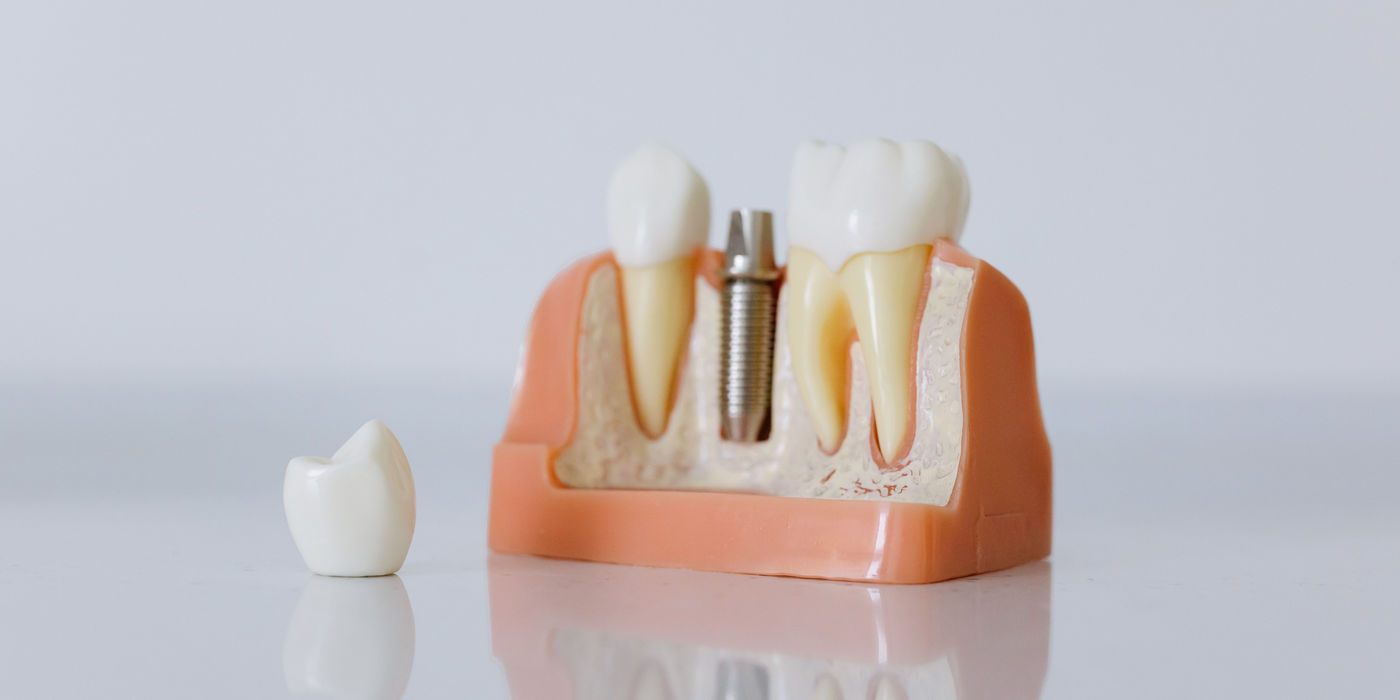
Getting a dental implant should not hurt while it is being placed. The procedure is carried out under local anaesthetic, so the area is numb: you may feel pressure and vibration, but not pain. Afterwards, some soreness and swelling for a few days is normal. For most people it is mild, is at its strongest in the first day or two and is managed with ordinary pain relief.
Fear of pain is one of the most common reasons people put off replacing a missing tooth. It helps to know what is usual, what is not and what you can do about it. This guide covers the procedure itself, the days that follow and the journey home if you are travelling to Antalya for treatment.
Key points
- Implants are placed under local anaesthetic. You are awake, and the area is numb.
- During the procedure you may feel pressure, pushing and vibration. If you feel anything sharp, tell your dentist and more anaesthetic can be given.
- Afterwards, soreness, swelling and sometimes bruising are common for a few days and usually settle within about a week.
- In a study of 234 patients, average pain was highest about 24 hours after surgery, at around 2 out of 10, and eased from there.
- Pain or swelling that gets worse after the third day is not the usual pattern. Contact your clinic.
Does it hurt during the procedure?
It should not. A dental implant is a small titanium post placed in the jawbone, and this is done under local anaesthetic, the same kind of injection used for a filling or an extraction. The injection itself can sting for a few seconds. Once the area is numb, you should not feel pain.
What you will notice is that numbness does not switch off every sensation. Most people describe:
- Pressure and pushing as the dentist works.
- Vibration and noise from the instruments.
- Water in the mouth, which is removed with suction.
- Keeping the mouth open for a while, which can make the jaw feel tired.
If anything feels sharp at any point, raise your hand. More anaesthetic can be given, and there is no need to sit through it.
Placing a single implant is often quicker than people expect. One NHS hospital describes it as taking around half an hour. Several implants, or additional steps such as bone grafting, take longer.
What about sedation?
Some clinics offer sedation alongside local anaesthetic for patients who are very anxious or who are having longer procedures. Sedation makes you relaxed and drowsy; the local anaesthetic is still what stops the pain. If dental treatment makes you nervous, say so when you first get in touch, so that the options available to you can be explained before you travel.
How much does it hurt afterwards?
When the anaesthetic wears off, usually after a few hours, the area starts to feel sore. This is expected: implant placement is minor surgery, and the gum and bone need to heal.
For most people the soreness is mild. In a study of 234 patients who received 510 implants, average pain was highest 24 hours after surgery, at about 2 on a scale of 0 to 10, and decreased gradually after that. Only a few patients reported moderate or severe pain. NHS hospital guidance says something similar: discomfort should last up to about a week and is usually managed with regular painkillers such as paracetamol or ibuprofen.
Everyone is different, and the amount of surgery matters. One implant in good bone is a smaller procedure than several implants, an extraction on the same day or a bone graft.
What the first week usually looks like
| When | What is common |
|---|---|
| Day of surgery | Numbness for a few hours, then soreness as it wears off. A little oozing of blood. |
| Days 1 to 3 | Soreness and swelling are usually at their strongest. Bruising of the cheek or chin can appear. |
| Days 4 to 7 | Swelling and soreness ease day by day. Most people feel largely back to normal. |
| After the first week | The gum continues to heal. Stitches, if used, are removed or dissolve. |
After that, the implant bonds with the bone over a period of usually three to six months. This part of healing happens quietly; you should not feel it.
What helps
Your dentist gives you written instructions for your own treatment, and those always come first. In general:
- Take pain relief as you were advised. NHS guidance suggests starting before the anaesthetic wears off and continuing regularly for the first two days.
- Use a cold pack wrapped in a cloth on the cheek for short periods during the first hours to limit swelling.
- Eat soft foods for the first days and avoid chewing on the implant site.
- Keep the area clean as you were shown, without disturbing the healing site.
- Do not smoke. Smoking slows healing and increases the risk of the implant failing.
- Rest on the day of surgery and avoid alcohol for the first 24 hours.
More general advice is in our aftercare guides.
When should you contact the clinic?
Mild swelling or tenderness that gets better each day is normal. Get in touch if:
- Pain or swelling increases after the third day instead of easing.
- Pain is not controlled by the pain relief you were advised to take.
- You notice a bad taste, pus or a temperature.
- Numbness or tingling in the lip, chin or tongue has not gone the day after surgery.
- A temporary tooth feels loose or has come off.
Get urgent care locally, and then let us know, if swelling spreads towards the eye or neck, you have difficulty breathing or swallowing, or bleeding does not stop with firm pressure.
Is this pain normal? Common situations
Strong pain after implant surgery
Strong pain is not the usual pattern. In the study above, only a few patients reported moderate or severe pain. If pain is not controlled by the pain relief you were advised to take, or it gets worse after the third day, contact the clinic so it can be checked.
Pain when chewing
In the first weeks, chew away from the implant as you were advised. Once the final crown is fitted and healing is complete, chewing on an implant should not hurt. Pain when biting at that stage should be checked; common reasons include a crown that touches too early in the bite or inflammation of the gum around the implant.
Pressure or a dull ache
A feeling of pressure or a dull ache around the implant is common in the first days while the swelling settles. It should ease a little each day.
When bone was added at the same visit
A bone graft during the same visit means more surgery, so swelling and soreness can be stronger and last a few days longer. Your written instructions take this into account.
After the implant is uncovered
Some implants heal under the gum and are uncovered in a short procedure before the final tooth is made. This is minor gum surgery under local anaesthetic, and any soreness usually settles within a few days.
Does anything make it more uncomfortable?
A few things can mean more soreness or a slower recovery:
- More surgery in one visit: several implants, extractions or bone grafting at the same time.
- Smoking around the time of surgery.
- Some medical conditions and medicines that affect healing, which is why your medical history is reviewed first.
- Anxiety. Being tense tends to make sensations feel stronger, so it is worth talking through any worries beforehand.
Full-arch treatment such as All-on-4 involves more surgery than a single implant, so expect more swelling and a longer recovery.
If you are travelling for treatment
Implant treatment at Rubi Smile normally involves two visits: the first for placing the implant, usually a few days, and the second for the final teeth after about three to six months. You can read more on our dental implants page and in how many days you need in Antalya.
The first days after surgery are when soreness and swelling are at their strongest, so it makes sense to keep them quiet. Your dentist confirms when you are ready to travel. Keep your written instructions and any medication in your hand luggage, and once you are home, send us a message if something changes.
Questions to ask before implant surgery
- Which anaesthetic will be used, and is sedation an option for me?
- How long will my procedure take?
- Will I need a bone graft or an extraction at the same visit?
- Which pain relief should I take, and for how long?
- What should I eat, and how should I clean the area?
- When can I fly home?
- Who do I contact if something does not feel right once I am home?
Frequently asked questions
Is getting a dental implant more painful than having a tooth taken out?
Not necessarily. Both are done under local anaesthetic, so neither should hurt at the time. In the study mentioned above, most patients rated the pain after implant placement as mild. How you feel afterwards depends on how much surgery was needed.
How long does the pain last after a dental implant?
Soreness is usually strongest in the first one to three days and eases after that. NHS guidance says discomfort should last up to about a week. Pain that is getting worse after the third day should be checked.
Will I be awake during implant surgery?
Usually, yes. Implants are normally placed under local anaesthetic, so you are awake and the area is numb. You may feel pressure and vibration, but you should not feel pain.
Can I go back to work the next day?
Many people do, especially after a single implant. Swelling or bruising can be visible for a few days, and after more extensive surgery you may want more time to rest.
Does fitting the crown on the implant hurt?
The final crown or bridge is fitted on your second visit, after the implant has healed. This stage is not surgery and is usually comfortable.
Is it normal for an implant to hurt months later?
No. Once the area has healed, an implant should not hurt. Pain, swelling or bleeding around an implant later on should be checked by a dentist.
Is it normal for an implant to hurt when chewing?
In the first weeks, chew away from the implant. After healing, and once the final crown is fitted, chewing on an implant should not hurt; pain when biting should be checked by a dentist.
Is severe pain after implant surgery normal?
No. Most people have mild soreness that is strongest in the first day or two. Pain that is not controlled by the advised pain relief, or that gets worse after the third day, should be checked.
Next step
If you are thinking about an implant and are worried about what it involves, send us your questions and any recent X-rays. A dentist reviews your case and your coordinator explains the treatment, the time you would need in Antalya and the cost before you plan any travel. You can read the steps in how consultations work.
Dr. Ertuğrul Çakmak is a dentist at Rubi Smile Turkey in Antalya. He graduated from the Faculty of Dentistry at Akdeniz University in 2021 and focuses on smile design, veneers, crowns, occlusion and CAD/CAM restorations. This article is general information and does not replace a personal examination. Read profile